

Hardware-Software Medical Device Development
Accelerate Hardware-Software Integration with AI-Native Compliance

Unified Compliance for Hardware-Software Medical Devices
For medical device teams building hardware, firmware, and software components, fragmented tools and manual workflows are the biggest barriers to fast releases. Ketryx unifies mechanical, electrical, and software development in a single AI-native traceability platform, enabling faster hardware-software integration while maintaining compliance with the FDA, ISO 13485, IEC 62304, and IEC 60601.

To build hardware-software medical devices, teams must coordinate across disciplines without sacrificing velocity.
Complex medical devices require careful coordination between mechanical design, electrical engineering, firmware, and software teams. Traditional compliance approaches create silos between disciplines and force manual handoffs that slow releases. How do you maintain traceability across hardware, firmware, and software without stopping engineering teams for documentation exercises?

One AI-Native Platform for Hardware, Firmware, and Software
Ketryx provides an AI-native platform for hardware-software medical device development. Manage requirements, specifications, and design documentation across all disciplines while AI maintains end-to-end traceability, identifies gaps, and accelerates critical tasks from system requirements through implementation and verification.
Book a demo
"Ketryx has allowed us to channel our hardware and software engineers' existing set of development, testing, and documentation practices directly into the generation of compliant documentation with minimal additional burden. This has allowed us to remain agile while delivering high-quality products."

Alexander Chan
VP of Analytics and Machine Learning
VP of Analytics and Machine Learning

Requirements Management
Manage Hardware and Software Requirements in One System
Define system-level requirements and decompose them into hardware specifications and software requirements. Maintain bidirectional traceability as requirements evolve throughout the product development lifecycle.
Learn more about Traceability

Eliminate manual copying of requirements between hardware and software tools
Track requirement changes across mechanical, electrical, and software domains automatically
Maintain compliance with ISO 13485, IEC 62304, and FDA design control requirements
Draft new requirements from design documents and identify redundancies across hardware and software domains with Ketryx AI
System Architecture
Model complex hardware-software systems as interconnected subsystems
Define your product architecture with mechanical assemblies, electronics, firmware, and software as traceable subsystems. This supports independent release cycles for software when hardware hasn't changed.
Watch Systems of Systems Webinar
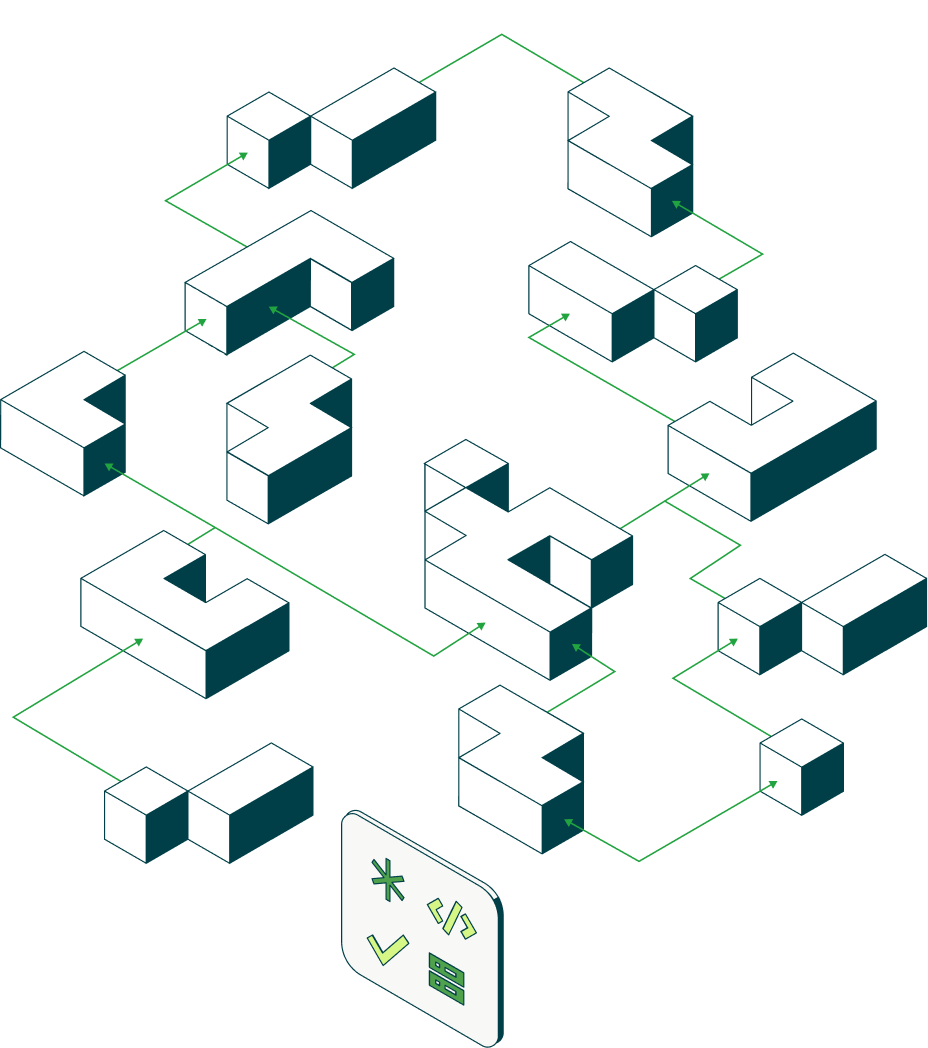
Model multifunction devices with medical and non-medical components
Ship software updates without re-validating unchanged hardware components
Support system of systems architectures for device families and platforms
Analyze architecture changes and identifies cross-domain impacts across mechanical, electrical, and software subsystems with Ketryx AI
Development & Integration
Connect code repositories and requirements tools in real-time
Integrate GitHub, GitLab, Jira, Polarion, and JAMA to maintain traceability as teams build. Developers and hardware engineers stay in their preferred tools while traceability updates automatically.
See our integrations
Keep hardware engineers in Polarion/DOORS while software teams use Jira/GitHub
Automatic traceability from firmware commits and tests to system-level requirements
Real-time trace matrix updates eliminate pre-submission documentation scrambles
Monitor implementation gaps with AI and flag when design is out of sync with requirements
Verification & Validation
Trace tests and verification activities across hardware and software
Automatically link hardware test protocols, software automated tests, and firmware validation activities back to requirements and risks, and generate verification documentation continuously.
Explore Traceability
Connect automated software tests in Git to requirements in Jira automatically
Trace hardware test protocols and software V&V activities to design inputs
Reduce documentation cycle time by 75% with auto-generated verification reports
Generate test cases with Ketryx AI for hardware and software requirements and identify coverage gaps before design freeze
Release & Maintenance
Manage Complete Product Lifecycle Across Hardware and Software
Support the complete product lifecycle with change control, cybersecurity management, component obsolescence tracking, and post-market surveillance across hardware-software product families.
See how a F50 Robotics Company assesses vulnerabilities 80% faster
Manage hardware revisions and software updates with unified change control across all domains
Track component obsolescence and supplier changes alongside software dependency vulnerabilities
Generate Software Bill of Materials and Hardware Bill of Materials with complete traceability
Assess change impact across mechanical, electrical, and software domains in minutes and generate updated documentation with AI
AI Agents
Accelerate critical tasks with safety-critical AI that keeps humans in the loop.
"Ketryx AI is the most scalable approach we've used for regulated product development. It lets our teams make frequent, safe changes while staying continuously audit-ready, without relying on linear headcount growth or stopping teams for compliance exercises."
Lucas Fernandez
Director of Medical Devices
Director of Medical Devices

Change Impact Assessment
When hardware changes affect software, or vice versa, Ketryx AI analyzes cross-domain dependencies automatically.

Reduce change planning from weeks to days across mechanical, electrical, and software domains
AI reasons through how hardware changes affect firmware and software requirements
Auto-generate updated requirements, risks, and test procedures
Requirements Intelligence
AI drafts new requirements, checks for redundancies, and identifies test coverage gaps.
Generate draft requirements in minutes based on hardware or software changes
Flag when tracking documents are out of sync with requirements
Identify redundancies and conflicts 85%+ faster
Risk Generation
AI identifies hazards from DHF, QMS, and external databases like MAUDE, then drafts risk assessments when requirements change.
Auto-generate risk scenarios by analyzing Design History Files, QMS records, and FDA MAUDE incident data
Maintain automatic traceability from hazards to requirements to risk controls
Identify requirements without risk assessments and risks without adequate controls
Test Case Generation
AI drafts verification test cases and identifies coverage gaps across hardware and software requirements.
Generate draft test cases in minutes based on requirement type, risk level, and verification method
Analyze test coverage 90% faster
Maintain automatic traceability from requirements to test cases to test results

.svg)